


CBI challenges Salem order
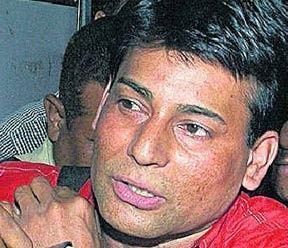
The Portuguese High Court’s decision to revoke underworld don Abu Salem’s extradition to India is being viewed as downright illegal by the legal wing of the CBI, which has contested the decision at the Supreme Court in Lisbon.
In its appeal in the Portuguese Supreme Court, the CB has contended that there was no violation of rules during Salem’s trial in different cases in India.
Officials here said that there was no question of sending back such a hard-core terror mastermind back to Portugal when legal process was still on against him in India in as many as nine cases.
Maharashtra Chief Minister Prithviraj Chavan said that he would take up the issue of cancellation of Salem’s extradition with the Ministry of External Affairs (MEA). Salem is one of the main accused in the 1993 Mumbai serial blasts case.
The High Court in Lisbon had last month revoked the extradition citing breach of undertaking given by India to the Portuguese authorities. Salem had filed a petition in the Portuguese High Court alleging violation of Rule of Speciality under which he was handed over in 2005 to the Indian authorities for trial in various cases pending here.
The CBI, through Ministry of External Affairs, filed the plea in the Portuguese Supreme Court arguing that it was a matter of interpretation of Rule of Speciality by the Supreme Court of India, which is binding on all subordinate courts in the country. On the other hand, the High Court of Lisbon has interpreted the Rule of Speciality differently, official sources said.
India has said slapping of additional charges on Salem is very much within the ambit of Section 21(b) of Extradition Act, 1962, which states that additional charges could be imposed on an accused if they were of lesser offence under which the person had been extradited.
In its affidavit submitted with the Portuguese Supreme Court, New Delhi has assured that fresh charges levelled against Salem, a key accused in the 1993 Mumbai blasts case, attracted less jail term than the offences for which he had been extradited, the sources said.
There is no mention of death penalty in the affidavit in the review petition in that country’s Supreme Court as India is bound by an ‘executive assurance’ to Portugal that Salem would not be given death penalty or charged with any section of law which entailed jail term of more than 25 years.
Abu Salem had challenged the framing of charges for the lesser offences in the Supreme Court here alleging that there has been violation of Rule of Speciality. The apex court in its judgment on September 10, 2010 rejected the petition filed by Salem.
The SC considered the Rule of Speciality as available in the laws of the US, the UK and Portugal and the Indian Extradition Act, and held that there has been no violation of Rule, since the additional charges framed against Abu Salem are made out from the same facts, which were considered for his extradition and provide lesser sentence as compared to the sentence provided for the offences for which his extradition was granted.
Abu Salem was detained on the basis of an Interpol Red Corner Notice in Lisbon on September 18, 2002 and thereafter a request for his extradition was made by India in nine cases which were pending against him. After long-drawn legal battle, Abu Salem was extradited to India in November, 2005. Salem was charged with stringent MCOCA for allegedly making extortion calls to Delhi-based businessman Ashok Gupta in 2002 demanding Rs 5 crore as protection money.
The Portuguese High Court had contended that in view of the new charges, the authorisation granted for his extradition has been terminated as it violated the Principle of Speciality.
The underworld don is facing trial in nine cases which included the Mumbai serial blasts, two cases of forgery of passports in Lucknow, three cases of extortion in Delhi and two murder cases in Mumbai which included murder of Ajit Dewani, secretary of Bollywood actress Manisha Koirala.
Abu Salem was an active member of criminal conspiracy, hatched by Dawood Ibrahim Kaskar (designated Global Terrorist), Tiger Memon, Mohammad Dossa and others, to commit various terrorist acts including bomb blasts.
Abu Salem actively participated in transporting and distribution of sophisticated arms and ammunitions which were smuggled into the country in the beginning of 1993. The bomb blasts took place on March 12, 1993..
Following the blasts, Salem left India after obtaining a passport in an assumed name from the Lucknow Passport Office, and joined Anees Ibrahim Kaskar and others at Dubai.


 Posts


